Step back in time through the preserved samurai districts of Kanazawa
While the neon lights of Tokyo and the crowded shrines of Kyoto often dominate Japanese travel itineraries, a quieter, more profound historical experience awaits in the Ishikawa Prefecture. Kanazawa, often referred to as “Little Kyoto,” offers something its larger counterpart struggles to maintain: an authentic, tranquil immersion into the Edo period. Having escaped the bombings of World War II, Kanazawa stands as one of the best-preserved castle towns in Japan, where the whispers of the samurai class still echo through narrow, earthen-walled lanes.
Article summary
Walking through the Nagamachi Samurai District isn’t just a sightseeing trip; it’s a temporal shift. Here, the meticulously maintained architecture and functional canal systems provide a raw look at the lifestyle of the warriors who once governed this land under the powerful Maeda Clan. If you are seeking the soul of feudal Japan without the suffocating crowds, Kanazawa is your premier destination.
The Heart of the Warrior: Nagamachi Samurai District
Located at the foot of the former Kanazawa Castle, the Nagamachi district was once the residential area for middle-to-high-ranking samurai. Today, it remains a labyrinth of cobblestone streets, hidden entrances, and private courtyards. The aesthetic is defined by bukeyashiki (samurai villas) protected by yellow mud walls (tsuchi-kabe) and heavy wooden gates.
One of the most striking features of Nagamachi is its Onigawa Canal. These waterways weren’t just for aesthetics; they were vital for fire prevention and transporting goods. During the winter, you will notice the walls are covered with straw mats called komogake, a traditional technique used to prevent the earthen structures from cracking during freeze-thaw cycles. This dedication to preservation makes Kanazawa a living museum.
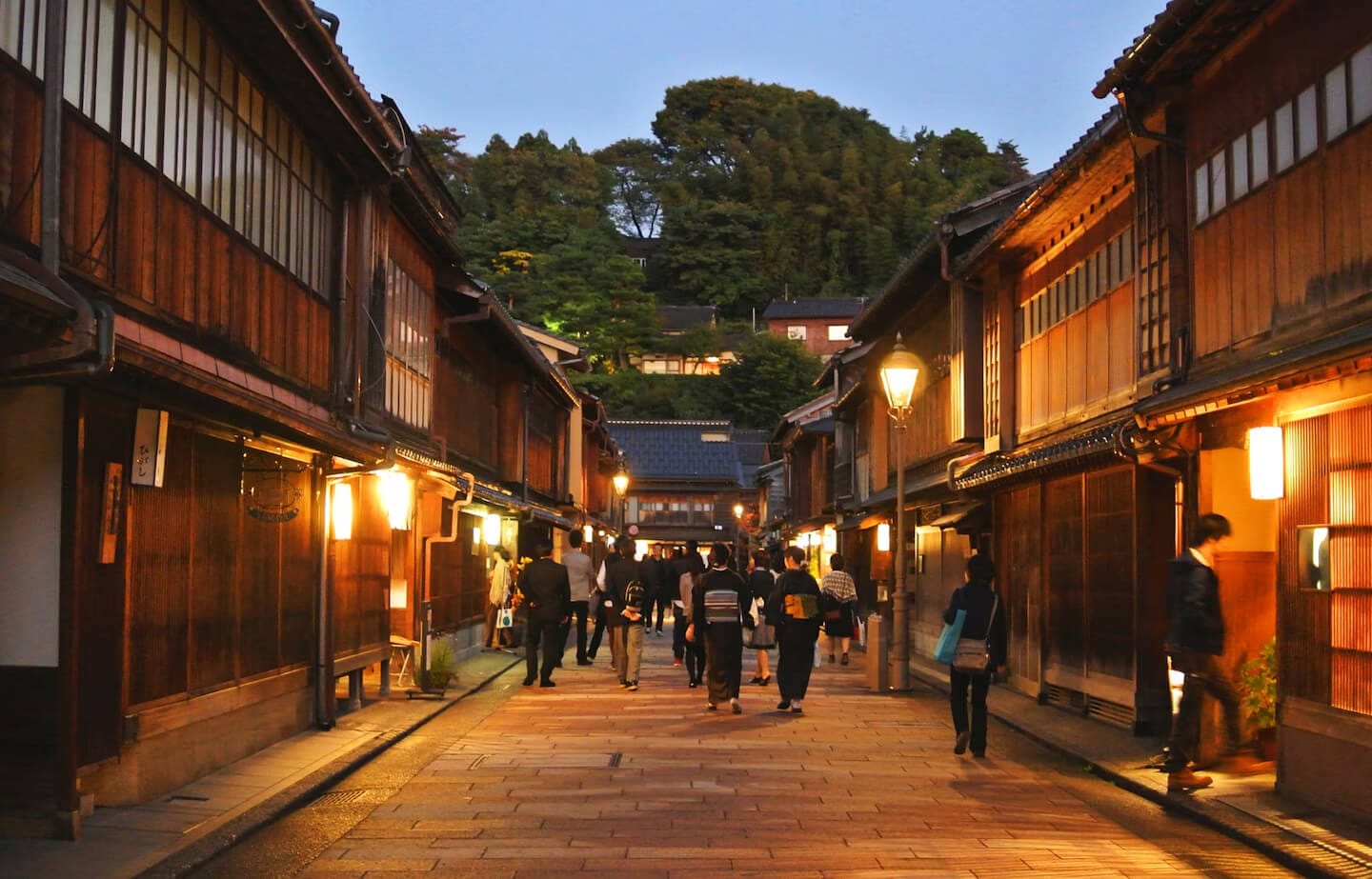
For an intimate look inside these historical homes, a visit to the Nomura Samurai Family Residence is essential. This restored villa features:
- Exquisite Heirloom Armor: On display in the entrance hall, showcasing the status of the Nomura family.
- Cypress Wood Interiors: Intricately carved ceilings and painted screen doors (fusuma).
- A World-Class Garden: Often ranked among the best small gardens in Japan, featuring a tiered waterfall and ancient koi ponds.
Kanazawa vs. Kyoto: Why This is the Authentic Choice
Many travelers find Kyoto’s Gion district beautiful but overwhelmingly commercialized. Kanazawa offers a slower pace. You won’t find thousands of tourists jostling for the same photo op. Instead, you find quiet corners where the only sound is the rushing water of the canals.
The city’s compact nature allows you to move from the samurai quarters to the Kanazawa Castle Park within minutes. This proximity allows for a cohesive understanding of how the city functioned—the castle as the defensive heart, and the surrounding districts as the social fabric of the elite.
Is Kanazawa worth visiting?
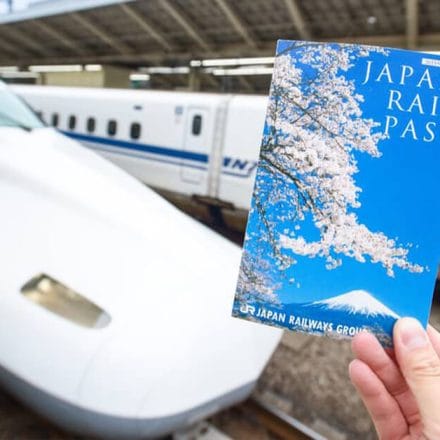
Absolutely. Kanazawa is widely considered a “must-visit” for those interested in Japanese history, traditional crafts, and gastronomy. Beyond the samurai districts, it is home to Kenrokuen, one of Japan’s three most beautiful landscape gardens. Because it is connected to Tokyo via the Hokuriku Shinkansen, it is easily accessible for a 2-day trip, offering a high density of cultural sites with significantly fewer crowds than the “Golden Route” cities.
What is the best samurai house in Kanazawa?
While there are several, the Nomura Clan House is the most iconic due to its stunning interior design and garden. However, for those interested in the daily life of lower-ranking warriors, the Takada Family House provides a fascinating contrast, featuring a restored gatehouse and a traditional stable, often with free admission. Exploring both gives a well-rounded perspective on the samurai social hierarchy.
Essential Stops for the History Enthusiast
To fully grasp the legacy of the Edo period in Kanazawa, make sure to include these locations in your walking tour:
- Kaga Honda Museum: This museum houses an impressive collection of arms, armor, and personal effects belonging to the Honda family, one of the eight chief families of the Kaga Domain.
- Shinise K記念館 (Old Merchant House): Located near the samurai district, this pharmacy-turned-museum illustrates how the merchant class lived alongside the warrior elite.
- The Ashigaru Shiryokan Museum: These are the former homes of the ashigaru (foot soldiers), offering a glimpse into the humbler side of military life.
Practical Tips for Your Visit
When planning your trip to Kanazawa, keep these practical points in mind to maximize your experience:
- The Kanazawa Loop Bus: This is the most efficient way to get around. It stops at all major historical districts, including Nagamachi and the Higashi Chaya (geisha) district.
- Visit Early: While less crowded than Kyoto, the Nagamachi streets are most atmospheric in the early morning light before shops open at 9:00 AM.
- Check the Official Tourism Site: For up-to-date opening hours and event calendars, consult the Visit Kanazawa Official Website.
Conclusion: A Legacy Carved in Stone and Soil
Kanazawa’s samurai districts are more than just a collection of old buildings; they are a testament to a philosophy of discipline, aesthetics, and architectural harmony. By stepping off the beaten path and into the narrow alleys of Nagamachi, you gain a deeper appreciation for the resilience of Japanese culture.
Pro Tip: Don’t just stick to the main paved roads. Follow the narrowest paths along the canals—these often lead to the most peaceful views and authentic architectural details that most tourists miss.