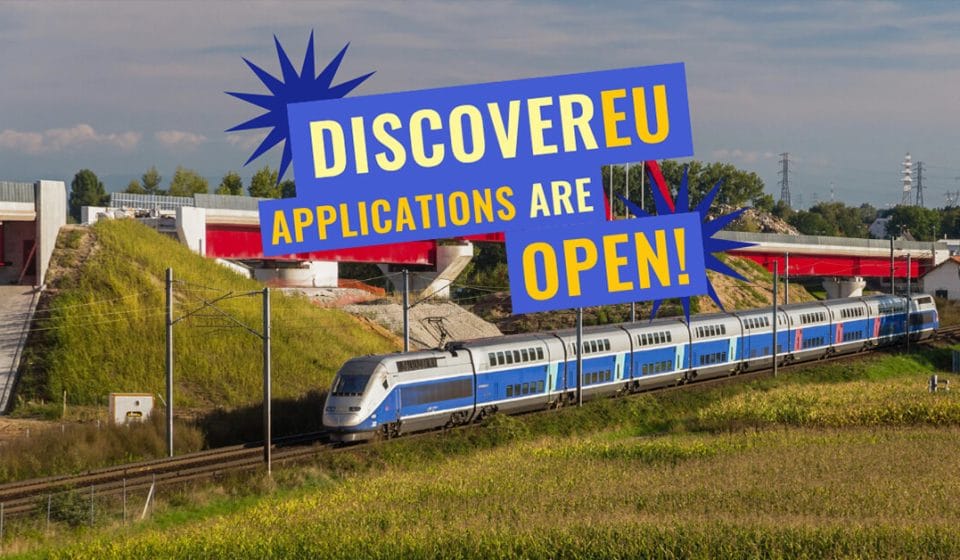
How to get a free train pass to explore Europe with DiscoverEU in 2026
Imagine waking up to the sunrise over the Swiss Alps, having lunch in a Parisian bistro, and watching the sunset from a bridge in Budapest—all without spending a single cent on train tickets. This isn’t just a backpacker’s dream; it is a tangible reality offered by the European Union. As the continent gears up for another year of exploration, the DiscoverEU 2026 program has officially announced that it will award 40,000 free travel passes to eligible young people. If you are looking to kickstart your journey into adulthood with an unforgettable adventure, here is everything you need to know about securing your golden ticket to Europe.
Article summary
- What is DiscoverEU and How 40,000 Free Passes Work
- Eligibility Check: Are You Born Between July 2007 and June 2008?
- Step-by-Step Application Process on the European Youth Portal
- Cracking the Quiz: The 5 Questions That Decide Your Trip
- Traveling Solo vs. Joining a Group of Up to 5 Friends
- Choosing Your Travel Option: Flexible vs. Fixed Passes
- Is the DiscoverEU pass completely free?
- Can I travel to the UK with DiscoverEU?
- What happens if I turn 18 after the application deadline?
- Conclusion: A Final Tip for Future Explorers
What is DiscoverEU and How 40,000 Free Passes Work
DiscoverEU is a flagship initiative of the European Union under the Erasmus+ program, designed to foster a sense of European identity and promote cultural exchange. At its core, the program is built on the principle of freedom of movement, allowing young citizens to cross borders, learn about European heritage, and connect with people from diverse backgrounds.
For the 2026 cycle, the EU has committed to distributing 40,000 travel passes. This initiative isn’t just about tourism; it’s a push toward sustainable travel. By prioritizing rail transport, DiscoverEU encourages the next generation of travelers to reduce their carbon footprint while discovering the hidden gems of the continent. From the bustling metropolises to the remote coastal villages, the rail network provides a window into the soul of Europe that flying simply cannot match. You can learn more about the broader goals of European mobility on the official European Youth Portal.
Eligibility Check: Are You Born Between July 2007 and June 2008?
The most crucial factor in applying for DiscoverEU is the age requirement. To ensure a fair distribution among a specific cohort, the program targets those turning 18. For the upcoming round, you must be born between 1 July 2007 and 30 June 2008 (inclusive).
Beyond the age limit, applicants must satisfy the following criteria:
- Be a citizen or a legal resident of one of the 27 European Union member states.
- Residents of third countries associated with the Erasmus+ program (such as Iceland, Liechtenstein, Norway, North Macedonia, Serbia, and Türkiye) are also eligible to apply.
- You must enter your correct ID, passport, or residence card number on the online application form.
Pro Tip: Double-check your documents. If the data provided during the application doesn’t match your official ID during the validation phase, your pass will be forfeited.
Step-by-Step Application Process on the European Youth Portal
Securing your pass requires a formal application through the official channels. Follow these steps to ensure your candidacy is registered correctly:
- Visit the Portal: Head to the European Youth Portal during the application window (usually announced a few weeks in advance).
- Identity Verification: Provide your personal details and confirm that you meet the age and residency requirements.
- Travel Planning: You don’t need a final itinerary yet, but you will be asked when you plan to travel (the journey must last between 1 day and 30 days).
- The Quiz: This is the most important part of the application, as it determines who receives the passes.
Cracking the Quiz: The 5 Questions That Decide Your Trip
The selection process isn’t a lottery; it is based on a quiz. Applicants must answer five multiple-choice questions regarding general knowledge about the European Union and its initiatives (such as the European Year of Youth or Green Deal).
After the five questions, there is a subsidiary question (the “tie-breaker”). This usually asks for an estimate—for example, “How many young people born in a certain month do you think will apply in this round?”. The 40,000 winners are chosen based on how many correct answers they give to the quiz and how close their estimate is to the actual number for the tie-breaker. It pays to do a little research on previous application statistics to make an educated guess!
Traveling Solo vs. Joining a Group of Up to 5 Friends
One of the best features of DiscoverEU is its flexibility regarding social dynamics. You can choose to venture out as a solo traveler, which is a fantastic way to build independence and meet new people in hostels or on trains.
However, if you prefer sharing the experience with your “squad,” you can apply as a group of up to 5 people. Here is how it works:
- One person acts as the group leader and fills out the application and the quiz.
- The leader receives a group code.
- The other 4 friends use that code to register their own personal data.
Note that if the group leader’s application is successful, the whole group gets passes. If the leader fails the quiz, unfortunately, the whole group is out. Choose your smartest friend to be the leader!

Choosing Your Travel Option: Flexible vs. Fixed Passes
Once you are selected, you must choose between two types of travel passes:
- The Flexible Option: This is the most popular choice. It allows you to travel on a set number of days (e.g., 7 travel days within a month), but you can decide the dates and destinations as you go. It’s perfect for those who want to follow the wind and change plans last minute.
- The Fixed Option: This is for those who prefer a structured itinerary. Your dates and destinations are pre-booked. This is often better for those traveling to high-demand destinations during peak season where seat reservations are hard to get.
Regardless of the pass type, all winners receive the European Youth Card (EYCA), which provides massive discounts on local transport, accommodation, museum entries, and food across all participating countries. You can check potential destinations and plan your route using Google Maps or specialized rail apps.
Is the DiscoverEU pass completely free?
Yes, the travel pass itself is free and covers the cost of rail travel. However, travelers must cover their own meals, accommodation, and personal expenses. Also, keep in mind that some high-speed trains and night trains require a paid seat reservation fee, which is not always covered by the pass.
Can I travel to the UK with DiscoverEU?
Since the United Kingdom is no longer a member of the European Union and has opted out of the Erasmus+ association for this program, the UK is generally not included in the standard DiscoverEU routes. The focus remains on EU member states and Erasmus+ associated countries.
What happens if I turn 18 after the application deadline?
The program is very strict about birth dates. If you are born outside the specified window (July 2007 – June 2008), you cannot apply for this specific round. However, DiscoverEU usually has two rounds per year, so if you are younger, your turn will likely come in the next session.
Conclusion: A Final Tip for Future Explorers
Winning a DiscoverEU pass is a life-changing opportunity that teaches you more about Europe—and yourself—than any textbook ever could. My final piece of advice: Don’t just stick to the famous capitals like Paris or Rome. Use the density of the European rail network to visit smaller cities like Ghent, Wroclaw, or Ljubljana. These “secondary” destinations are often more affordable, less crowded, and offer a much more authentic glimpse into the local culture. Stay curious, pack light, and get ready for the ride of a lifetime!