

The Ultimate Insider Guide to the Best Things to Do in Prague for a 2026 City Break
Stepping into Prague is like walking through the gilded pages of a living storybook. Known as the “City of a Hundred Spires,” the Czech capital remains one of Europe’s most magnetic destinations, blending Gothic drama with a pulsing contemporary energy. Whether you are chasing the first light of dawn over the Vltava River or seeking the perfect pint in a hidden courtyard, Prague in 2026 offers a sophisticated mix of timeless history and modern flair. This guide explores the essential landmarks and secret strategies to help you navigate the city’s magic while avoiding the tourist traps.
Article summary
- Crossing the Iconic Charles Bridge Without the Crowds
- Exploring Prague Castle: The Largest Ancient Fortress in the World
- The Magic of Old Town Square and the Astronomical Clock
- Panoramic Views from Petřín Hill and the Letná Park Beer Garden
- Discovering Jewish Quarter History and the Old Jewish Cemetery
- Modern Prague: From the Dancing House to Art in Public Spaces
- Is Prague expensive to visit in 2026?
- What is the best month to go to Prague?
- How many days do you need in Prague?
- Conclusion & Final Travel Tip
From the cobblestones of Old Town to the brutalist sculptures of the suburbs, Prague demands to be seen with fresh eyes. Here is how to craft a truly unforgettable journey through the heart of Bohemia.
Crossing the Iconic Charles Bridge Without the Crowds
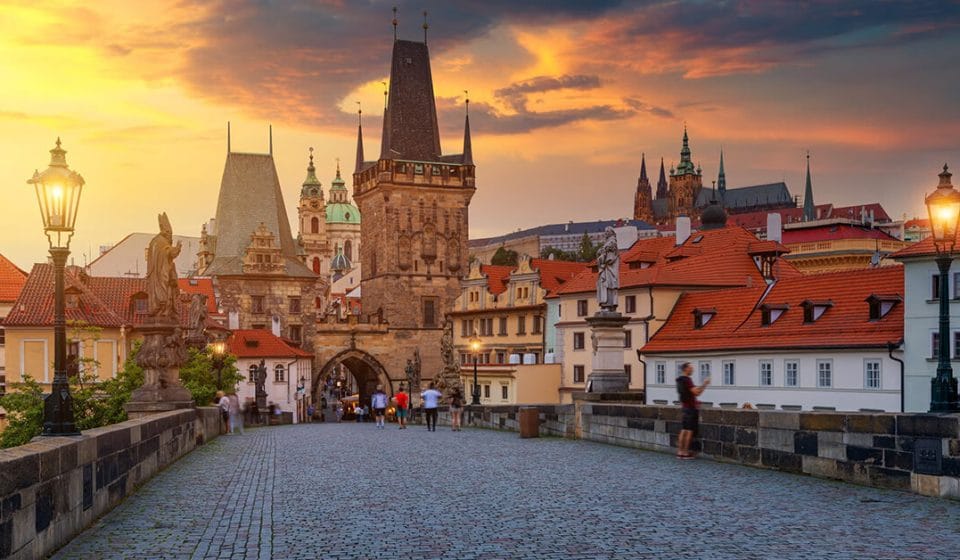
The Charles Bridge (Karlův most) is the undisputed soul of Prague. Connecting the Old Town with Malá Strana, this 14th-century stone marvel is lined with 30 baroque-style statues of saints. However, by midday, it often becomes a bottleneck of selfie sticks and street performers.
To witness its true majesty, visit at sunrise. As the mist rises off the Vltava and the first rays of light hit the blackened sandstone, the bridge feels hauntingly cinematic. Focus your attention on the statue of St. John of Nepomuk; legend says that touching the bronze plaque will ensure your return to Prague. By arriving before 7:30 AM, you bypass the 30,000 daily visitors and can appreciate the architectural transition from the Old Town Bridge Tower to the serene hills of the Castle District.
Exploring Prague Castle: The Largest Ancient Fortress in the World
Dominating the skyline is Prague Castle, a sprawling complex that holds the Guinness World Record for the largest ancient castle in the world. This is not just one building, but a fortified city containing palaces, churches, and gardens.
- St. Vitus Cathedral: A masterpiece of Gothic architecture. Look for the stunning stained glass window designed by Art Nouveau master Alphonse Mucha.
- Golden Lane: A row of tiny, brightly colored houses where castle guards and goldsmiths once lived. House No. 22 was once the residence of Franz Kafka.
- The Royal Gardens: A peaceful escape offering a different perspective of the fortress walls.

Pro Tip: To avoid the notorious ticket lines, always purchase your tickets online via the official site. In 2026, security checks are streamlined, but arriving via the “Deer Moat” (Jelení příkop) entrance can often save you 20 minutes of waiting compared to the main Hradčanské Square gate.
The Magic of Old Town Square and the Astronomical Clock
The Old Town Square is a kaleidoscope of architectural styles, from the towering Gothic spires of the Týn Church to the pastel Baroque facades. The centerpiece is the Astronomical Clock (Orloj), which has been ticking since 1410. Every hour, crowds gather to watch the “Walk of the Apostles,” a brief but enchanting mechanical performance.
After the spectacle, skip the overpriced kiosks on the square and head to a historic café. Places like Café Mozart or the nearby Grand Café Orient (the world’s only Cubist interior) offer a sophisticated atmosphere to enjoy a traditional Větrník (cream puff) while watching the city bustle by. For the best photos of the square, climb the Old Town Hall Tower for a 360-degree panoramic view.
Panoramic Views from Petřín Hill and the Letná Park Beer Garden
For those seeking the iconic “red roof” photos of Prague, escaping the valley floor is essential. Petřín Hill is accessible via a charming funicular (use your standard Prague Public Transport ticket). At the top, you’ll find a miniature version of the Eiffel Tower, providing the highest vantage point in the city.
If you prefer a more local vibe, head to Letná Park. This plateau offers a legendary Beer Garden with long wooden tables shaded by chestnut trees. It is the quintessential Prague experience: holding a cold Czech pilsner while looking down at the succession of bridges spanning the Vltava. It’s the perfect spot for a sunset session as the city lights begin to twinkle.

Discovering Jewish Quarter History and the Old Jewish Cemetery
The district of Josefov (the Jewish Quarter) is a poignant testament to centuries of resilience. Unlike many European cities, Prague’s Jewish heritage remained largely intact during WWII. A visit here is best done with a unified ticket to the Jewish Museum, which includes several synagogues and the Old Jewish Cemetery.
The cemetery is one of the most remarkable sites in Europe, where over 12,000 gravestones are layered upon one another due to lack of space, creating a haunting, jagged landscape of stone. Inside the Pinkas Synagogue, the walls are inscribed with the names of nearly 80,000 Czech victims of the Holocaust—a sobering and necessary encounter with the city’s deep cultural history.
Modern Prague: From the Dancing House to Art in Public Spaces
Prague isn’t just a museum of the past; it is a laboratory for modern expression. Start at the Dancing House (Tančící dům), designed by Frank Gehry and Vlado Milunić. Its deconstructivist “Fred and Ginger” towers symbolize the city’s transition into a new era after the Velvet Revolution.

As you wander, keep an eye out for the provocative works of David Černý. You’ll find his “Giant Babies” crawling up the Žižkov Television Tower and his “Hanging Man” (representing Sigmund Freud) suspended above a street in Old Town. These installations provide a sharp, witty contrast to the city’s medieval backdrop.
Is Prague expensive to visit in 2026?
While prices have risen, Prague remains more affordable than London or Paris. A budget of €70–€100 per day covers mid-range dining, transport, and museum entries. To save money, look for “Polední menu” (lunch specials) at local pubs, which offer hearty meals for under €10.
What is the best month to go to Prague?
May and September are ideal for mild weather and blooming gardens. However, for those who don’t mind the cold, December is magical due to the world-famous Christmas Markets. If you want to avoid crowds, late February offers the lowest hotel rates and a peaceful atmosphere.
How many days do you need in Prague?
Three full days is the “sweet spot” for a city break. This allows two days for the major sights (Castle, Old Town, Jewish Quarter) and one day to explore trendy neighborhoods like Vinohrady or Karlín, where the best local coffee shops and design boutiques are located.
Conclusion & Final Travel Tip
Prague is a city that rewards the curious and the early risers. Beyond the famous landmarks, its true charm lies in the narrow alleyways and the quiet courtyards where history feels tangible. For a final piece of advice: always carry a small amount of Czech Koruna (CZK). While most places accept cards or Apple Pay in 2026, some of the most authentic, centuries-old “hospoda” (pubs) still prefer cash for that legendary glass of liquid bread.
Ready to start your journey? Check the Prague Interactive Map to pin your favorite spots and start walking!


